



- Published on: 2026-02-10 17:00:00
Fair Value Gap (FVG) Trading Strategy: How to Identify High-Probability Setups
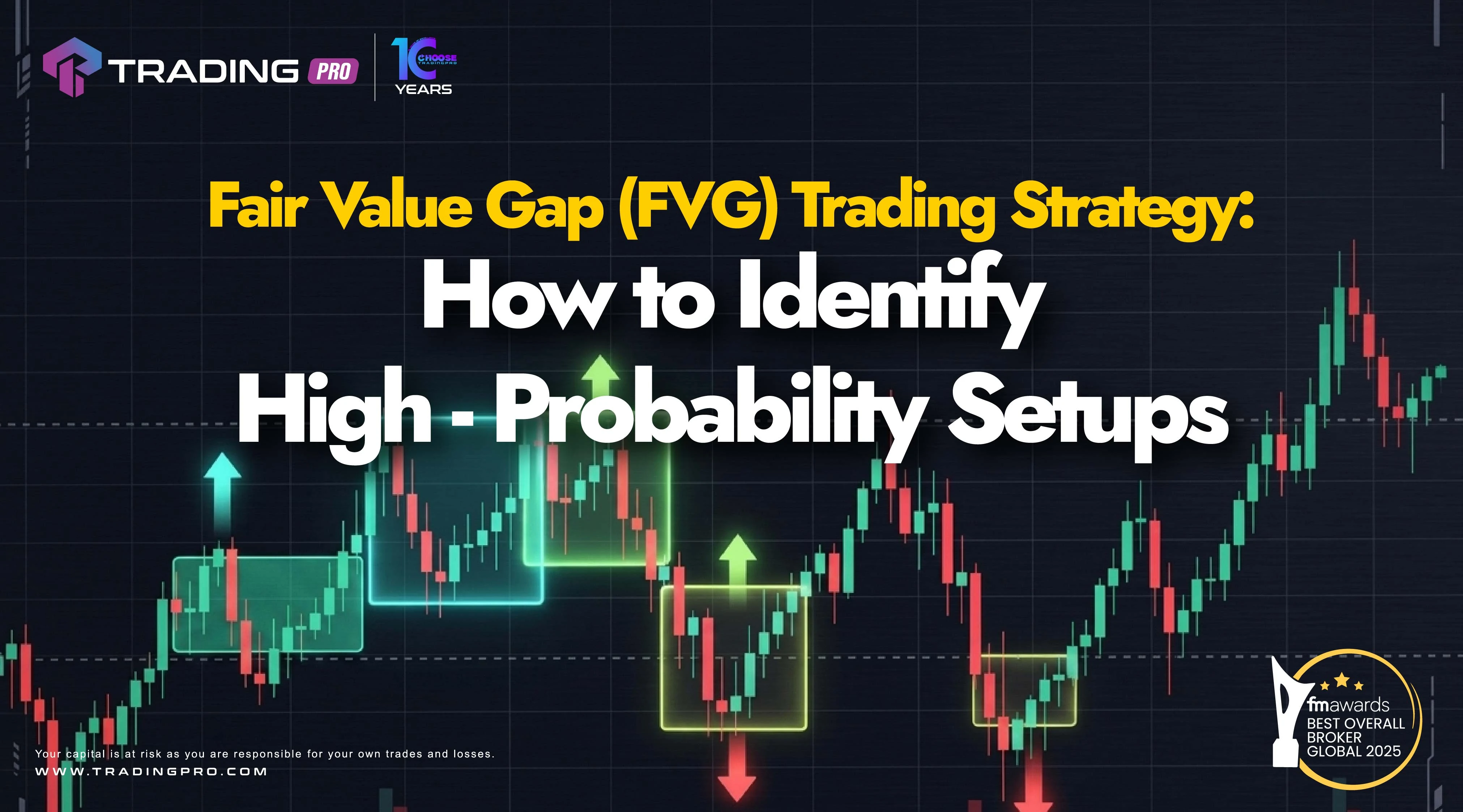
In trading, most losses don’t come from “bad entries.” They come from entering at the wrong location. That distinction matters. A Fair Value Gap (FVG) is often marketed as a powerful concept — and it is — but only when used in the right context. On its own, it’s just a price pattern. Inside structure and liquidity logic, it becomes precision.
If you’re serious about building a professional forex trading strategy, understanding which FVGs matter — and which to ignore — changes everything.
What Is a Fair Value Gap?

A Fair Value Gap forms when price moves so aggressively that normal two-sided trading doesn’t occur. The result is an imbalance — a price zone where orders were not efficiently matched.
Technically, it appears as a three-candle formation:
- The first and third candles do not overlap
- The middle candle shows strong displacement
Markets often revisit these gaps to rebalance before continuing in the dominant direction. But here’s the reality: most FVGs are noisy. The edge comes from filtering.
The Criteria That Separate Average FVGs From High-Probability Ones
1. Start with Market Structure
Direction is non-negotiable.
If the market is printing higher highs and higher lows, only bullish FVGs deserve attention. In a downtrend, the focus shifts to bearish ones. Trading gaps against structure might work occasionally, but over time it erodes consistency. Professionals align with flow, not against it.
2. Look for Real Displacement
Not all moves are created equal. Strong FVGs are born from impulsive price action.
You want to see:
- Large-bodied candles
- Limited wicks
- A break in structure
- Often a liquidity sweep just before the move
If the move into the gap looks lazy or choppy, the imbalance lacks conviction.
3. Location Matters: Premium vs. Discount
Professionals think in terms of value.
In a bullish environment, the best FVGs form in discount zones — below the midpoint of the dealing range. In bearish conditions, premium zones are preferred. A gap in the middle of nowhere carries far less weight.
4. Check the Liquidity Story
High-probability setups often begin with liquidity being taken. Equal highs swept. A prior low run. A session high cleared.
That event tells you orders have been triggered and the market has fuel to move. The FVG that follows is not random — it’s part of a sequence.
High-probability setups often begin with liquidity being taken. Equal highs swept. A prior low run. A session high cleared.
That event tells you orders have been triggered and the market has fuel to move. The FVG that follows is not random — it’s part of a sequence.
5. Respect Timeframe Hierarchy
A one-minute gap against a four-hour trend is just noise. Higher timeframes define direction and context. Lower timeframes provide entries.
This alignment keeps trades anchored in the broader narrative instead of isolated signals.
6. Confluence Adds Weight
An FVG becomes significantly more reliable when it overlaps with a key price zone — an order block, mitigation level, or prior imbalance. These areas represent unfinished business in the market. When multiple factors point to the same level, reaction probability rises.
7. Observe How Price Returns
The retracement back into the gap is telling.
A slow, controlled pullback with smaller candles suggests absorption and readiness to continue. A fast, aggressive return often signals the gap may not hold.
8. Understand Fill Behavior
A partial fill followed by rejection shows strength and continuation potential. A full fill with a close through the gap weakens the premise and may invalidate the setup.
9. Timing Improves Probability
High-liquidity sessions — especially London and New York opens — tend to produce cleaner reactions. Low-volume periods can distort price behavior and reduce reliability.
10. The Trade Must Make Sense Structurally
Even the best-looking FVG is not worth trading if the risk-to-reward is poor. There must be logical stop placement beyond structure and a realistic target at external liquidity. Without that framework, it’s just a pattern, not a plan.
What to Avoid
Most losing trades come from gaps that:
- Form inside consolidation
- Show weak displacement
- Sit mid-range
- Oppose higher timeframe direction
- Appear in low-liquidity hours
These are the traps.
The Bottom Line
A Fair Value Gap is not the setup. It’s the entry location within a larger setup built on structure, liquidity, and displacement.
Used alone, it’s random. Used correctly, it provides precision and consistency — the difference between retail-style trading and professional execution.
Master the context first. The gap simply tells you where to act, not why.
Stop trading the noise. Start trading the narrative. Follow TradingPRO for professional insights and high-probability setups.
Facebook | Instagram | Telegram | LinkedIn | Twitter (X)


