



- Published on: 2026-02-11 17:00:00
The More I Try, the More Money I Lose But Other People Are Making It
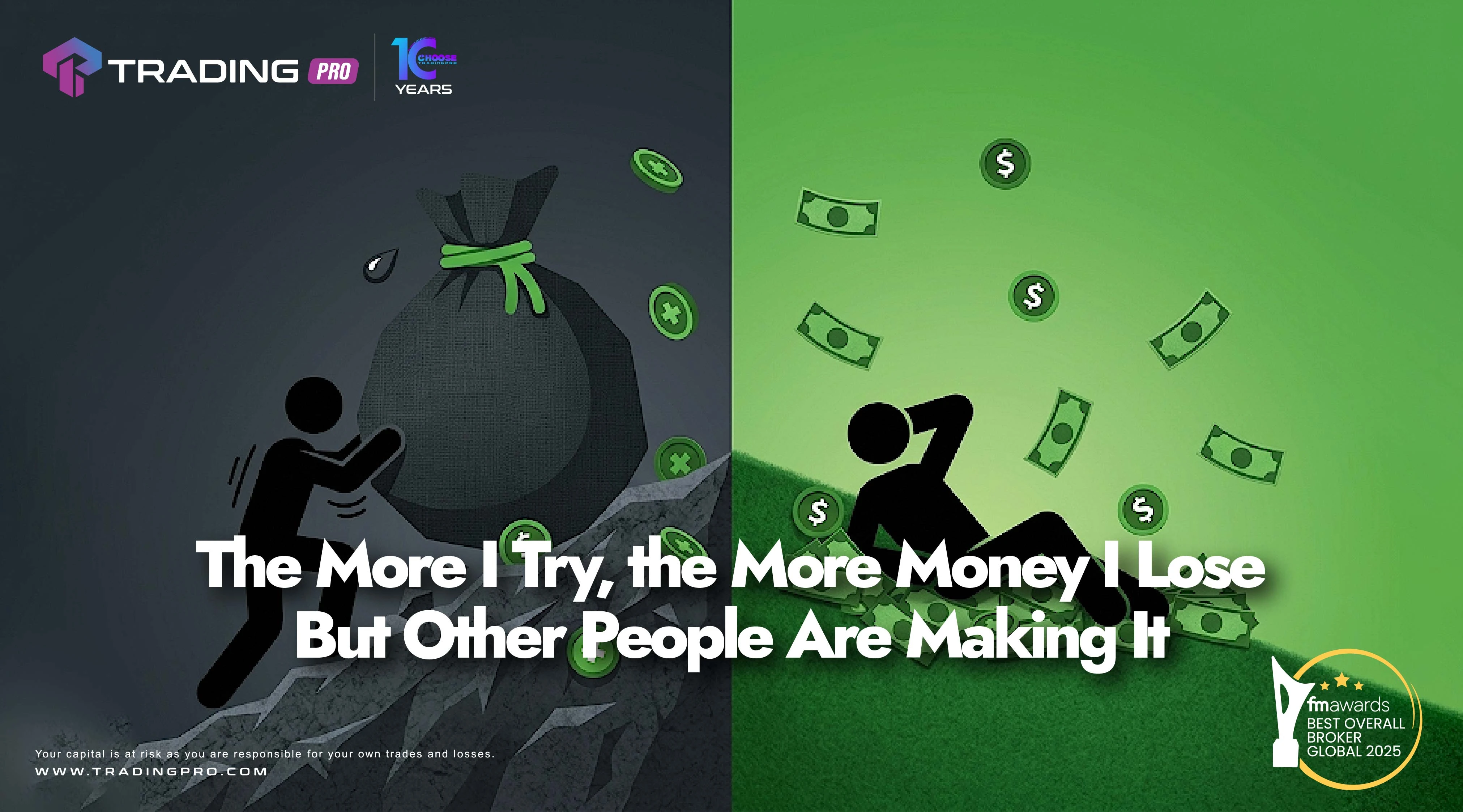
It’s one of the most frustrating thoughts a trader can have: “I’m putting in the effort… so why am I still losing?” You’re studying charts, watching tutorials, following traders online, maybe even investing in courses. You’re not lazy. You’re not careless. In fact, you’re trying harder than ever.
Yet your account keeps shrinking.
Meanwhile, other people seem to be making money. They post results. They talk about consistency. Some even make it look easy.
Here’s the truth most traders don’t hear soon enough: in forex, trying harder can actually make things worse — if that effort isn’t structured.
Let’s talk about why this happens, and how traders who struggle at this stage eventually turn things around.
Effort Alone Doesn’t Pay — Structure Does
In most areas of life, more effort usually leads to better results. Study more, get better grades. Train more, get stronger. Work more hours, earn more money.
Trading doesn’t work like that.
You can spend 10 hours a day staring at charts and still lose consistently if there’s no structure behind what you’re doing. Many traders are active, but not organized. They:
- Take trades based on feelings
- Change strategies every few weeks
- Skip journaling
- Risk different amounts on every trade
- Trade whenever they feel like it
That isn’t a process. That’s improvisation with money on the line.
The traders who last in this game operate differently. They know exactly what a valid setup looks like. They know how much they risk every time. They know when to stay out. Their trading can be explained step by step — not defended emotionally after the fact.
The market doesn’t reward how badly you want it. It rewards consistency in execution.
You Might Be Practicing the Wrong Things
Repetition builds skill — but only if you’re repeating the right behavior.
If you repeatedly move your stop loss because you “feel” the price will come back, you’re not gaining experience. You’re strengthening a bad habit. If you constantly increase lot size after a loss to recover faster, you’re training yourself to be reactive, not disciplined.
Over time, these patterns get harder to break. Many struggling traders aren’t beginners anymore. They’re just very experienced at making the same mistakes.
Winning traders also repeat actions — but different ones. They practice waiting. They practice saying no to trades that almost fit their plan. They practice accepting small losses without trying to “fix” them. They build emotional control the same way others build impulsive behavior.
The difference isn’t intelligence. It’s what’s being reinforced.
When Money Is the Focus, Emotions Take Over
If every trading day is judged by profit or loss, your emotional state will swing with your account balance. A green day feels like success. A red day feels like failure.
But trading doesn’t work in straight lines. Even a strong strategy has losing trades. Sometimes losing streaks. If your confidence depends on short-term results, you’ll never feel stable enough to execute well.
Professionals think differently. After a trade, their main question isn’t “Did I make money?” It’s “Did I follow my rules?” If the answer is yes, they consider it a good trade — even if it lost.
That shift is powerful. It moves your focus from outcome, which you can’t control, to process, which you can. Over time, a solid process produces better results. But in the short term, it simply gives you consistency in behavior — and that’s what reduces emotional chaos.
Trading More Is Usually the Wrong Move
When traders feel stuck, their instinct is to increase activity. More trades. More setups. More chances to make it back.
The problem is, high-quality opportunities are not constant. The market spends a lot of time moving randomly. Professionals accept this and wait. Struggling traders feel uncomfortable waiting, so they create opportunities that aren’t really there.
This leads to overtrading — one of the fastest ways to drain an account. You start taking weaker setups, second-guessing yourself, and getting mentally tired. Decision quality drops. Frustration rises.
Ironically, progress in trading often begins when you slow down, not speed up.
Risk Is Quietly Running the Show
Many traders think their main issue is finding better entries. Entries matter, but risk management often matters more.
If you’re risking a large percentage of your account per trade, your emotional stability is always under threat. A small losing streak suddenly feels like a crisis. You start changing things mid-trade, closing early, or holding losers too long because the loss feels too big.
Lower risk might feel slow, even boring. But it gives you room to think clearly. It keeps you in the game long enough to learn. Big risk creates dramatic swings that make discipline much harder to maintain.
The goal early on isn’t to grow fast. It’s to survive while building skill.
Expectations Have Been Warped
Social media has changed how traders see the journey. You see big wins, fast growth, and dramatic “account flips.” What you don’t see are the years of struggle behind many of those traders — or the countless blown accounts along the way.
Trading is a compounding game. In the beginning, progress is subtle. Consistent, modest returns don’t look exciting, but they build a foundation. Many traders quit during this quiet phase because it doesn’t match the fast results they expected.
When expectations are unrealistic, patience disappears. When patience disappears, discipline weakens. And losses increase.
No Review, No Improvement
Imagine trying to improve at something without ever reviewing your performance. That’s how many people trade.
Without a journal, every loss feels random. Every win feels like proof you’re “figuring it out.” But feelings don’t give you clear feedback.
When you start tracking your trades, patterns emerge. You see which setups actually perform well. You notice where you break rules most often. You see how emotions influence your decisions. That awareness is where real growth begins.
Improvement in trading rarely comes from watching more content. It comes from studying by yourself.
Alignment Matters More Than Excitement
A lot of losses come from trading against the broader market direction. You see a small move on a lower timeframe and jump in, ignoring the bigger picture.
Higher timeframes provide context. They don’t guarantee a trade will work, but they help you understand the environment you’re trading in. Ignoring that context is like swimming against a strong current. You might move a little, but it’s exhausting and often short-lived.
Consistency improves when your trades make sense within the larger structure.
The Real Turning Point
Eventually, successful traders go through a mental shift. They stop chasing quick results and start focusing on execution quality. Trading becomes less exciting — and more professional.
They accept that growth can be slow. They accept boredom. They value routine. They protect their mental energy. They stop trying to force the market to give them something today.
That’s when things start to stabilize.
Where to Go From Here
If you feel like the more you try, the more you lose, you’re not broken — you’re likely just at the stage where effort needs direction.
Simplify. Define one approach and stick to it. Lower your risk. Trade less. Journal honestly. Review your behavior, not just your balance.
The traders making money aren’t necessarily smarter or luckier. They’ve just built a structure strong enough to carry them through the emotional ups and downs of the market.
At some point, the focus shifts from trying harder to doing things properly. And that’s when the experience of trading starts to change — from constant frustration to gradual, steady control.
Effort isn't the problem—structure is. Stop spinning your wheels and start building a repeatable process. Follow TradingPRO on all platforms to turn your effort into results.
Facebook | Instagram | Telegram | LinkedIn | Twitter (X)


