



- Published on: 2026-03-04 11:30:00
Indicator Dependency: The Silent Trap Destroying Forex Trading Accounts
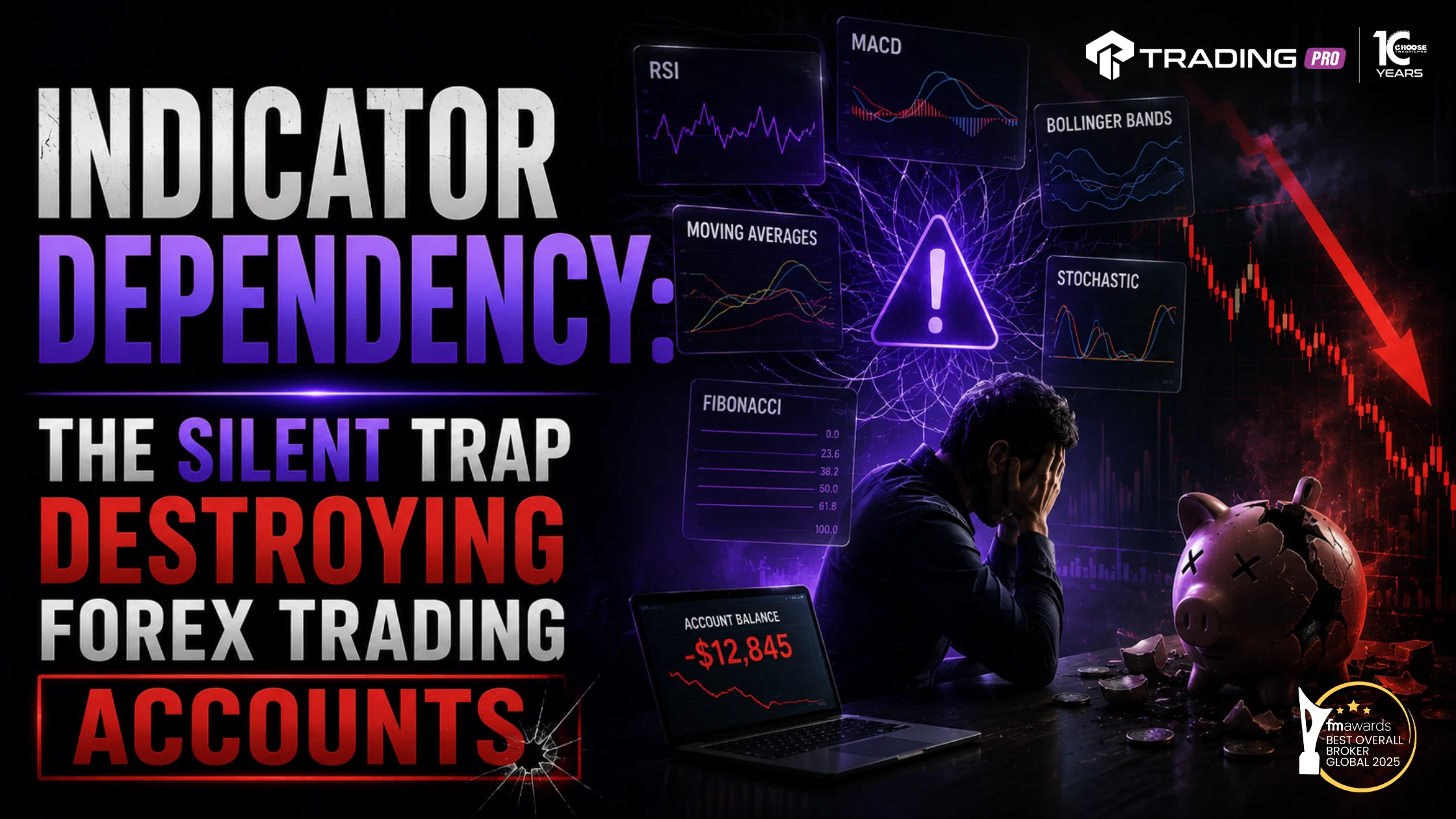
As a forex trader with several years of live market experience, one common trap stands out above almost everything else for the damage it quietly inflicts on retail accounts: indicator dependency. Technical indicators are genuinely useful tools — but overreliance on them can systematically undermine your performance, erode your risk management, and distort your trading psychology in ways that are difficult to diagnose until the damage is already done.
Indicators like Moving Averages, RSI, MACD, Bollinger Bands, and Stochastic Oscillators are designed to interpret price data. That phrase deserves emphasis — they interpret price data. They are derivatives of price, not predictors of it. Yet the majority of retail traders treat them as crystal balls rather than what they truly are: confirmation tools. That misunderstanding is where the problem begins.

The Illusion of Precision
When traders stack multiple technical indicators onto a single chart, it creates a powerful but ultimately false sense of certainty. A moving average crossover aligns with RSI divergence. MACD confirms momentum. Everything appears synchronised and conclusive. But the forex market is not moved by perfectly aligned indicator signals — it is moved by liquidity, macroeconomic forces, and institutional order flow. The signals are lagging interpretations of what has already happened.
This dependency produces a recognisable set of consequences:
- Late entries caused by waiting for lagging indicators to confirm what price has already communicated
- Missed opportunities in strong, fast-moving trends where indicators fail to keep pace
- Over-optimisation and curve fitting as traders tweak settings endlessly in search of the perfect configuration
- Emotional conflict when multiple indicators send contradictory signals, leaving the trader paralysed or guessing
In fast-moving forex markets, lag does not just create inconvenience. Lag equals loss.
Price Action vs Indicator Overload
Professional traders consistently prioritise price action and market structure over an abundance of technical tools. Support and resistance levels, trend direction, liquidity zones, and fundamental catalysts provide clearer and more immediate context than waiting for four or five indicators to reach consensus — which, in volatile conditions, they often never do.
Indicators should support a trading strategy. They should never define it entirely.
A clean, effective approach might look like this:
- 20 and 50 EMAs for identifying trend direction and dynamic support
- RSI for momentum confirmation and identifying overextended conditions
- Chart structure — clean price action, key levels, and market context — for precise entries and exits
That is a complete framework. It is also a deliberately simple one. Simplicity in trading is not a limitation — it is a competitive advantage. The fewer moving parts a strategy has, the easier it is to execute with consistency, and the easier it is to diagnose when something goes wrong.
The Psychological Cost of Indicator Dependency
Beyond the technical limitations, indicator dependency carries a significant psychological cost that rarely gets the attention it deserves. When trades go wrong — as they inevitably will — indicator-dependent traders direct their frustration at the tools rather than examining their own risk management, position sizing, or execution quality. The response becomes a search for a better indicator rather than a commitment to better discipline.
This cycle is self-perpetuating and expensive. Traders move from system to system, indicator to indicator, never staying in one place long enough to accumulate the sample size needed to evaluate whether a genuine edge exists. Each switch resets the clock and reinforces the belief that the right combination of signals is still out there somewhere.
Successful forex trading is far less about discovering the ultimate indicator and far more about mastering probability, protecting capital, and maintaining emotional control under pressure.
Final Thoughts
Technical indicators are valuable components of a well-constructed forex trading strategy — but they must never substitute for a genuine understanding of market behaviour. Price action, market structure, and macroeconomic context are the foundations. Indicators are the supporting layer, not the architecture.
The most important principle to carry forward is this: indicators interpret price. Price moves the market. Build your strategy around that truth, keep your chart clean, and let simplicity do what complexity never can — give you clarity when it matters most.
Ditch the indicator overload and start trading with clarity.
Join the TradingPRO community and get access to daily market analysis, trading psychology guides, and strategy breakdowns — completely free.
Facebook | Instagram | Telegram | LinkedIn | Twitter (X)


