



- Published on: 2026-02-24 18:00:00
Session Mismanagement: Why Timing Is a Structural Edge in Forex Trading
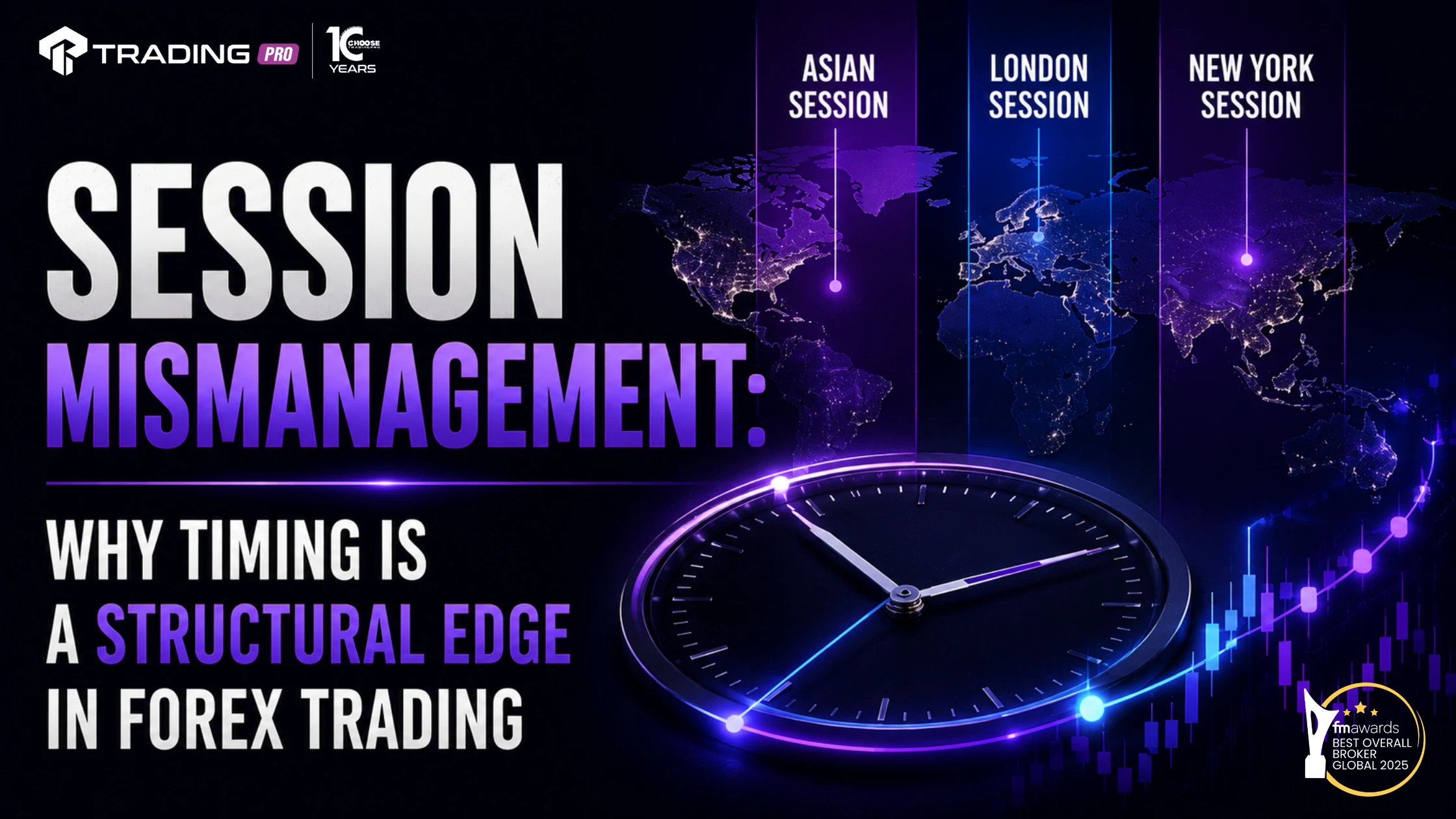
In foreign exchange trading, timing is not a minor detail, it is a structural edge. After decades in the market, one recurring performance killer stands out across retail accounts more than almost anything else: session mismanagement. Traders obsess over indicators, entry models, and strategy refinements, yet routinely ignore the single variable that governs volatility, liquidity, and execution quality of the trading session. Ignoring session dynamics is not a minor oversight. It is the equivalent of trading blindfolded.
Understanding the Three Forex Sessions
The forex market operates across three primary sessions: Asian, London, and New York. Each has distinct characteristics that directly affect how price behaves, how reliable setups are, and how cleanly trades execute.
The Asian session typically produces consolidation and subdued volatility. Price tends to range, liquidity is thinner, and directional moves lack the institutional backing needed to sustain momentum.
The London session introduces significant institutional volume and directional expansion. This is where the majority of high-probability setups develop, driven by the participation of the world's largest financial centre.
The New York session initially overlaps with London, delivering peak liquidity and the most favourable execution conditions of the trading day. As London closes and New York continues alone, however, conditions shift — movement becomes more erratic and less structurally reliable.
Professionals align their strategy to session behaviour. Amateurs trade every hour as though market conditions are identical across the clock.
Where the Real Edge Lives
From a statistical standpoint, the majority of A-grade setups occur during high-liquidity windows — specifically the London open and the London–New York overlap. These periods offer tighter spreads, cleaner price delivery, and more reliable market structure confirmation.
Trading outside these windows carries a measurably higher cost: increased slippage risk, a greater frequency of false breakouts, and price fluctuations driven by thin-market randomness rather than genuine order flow. In short, probability deteriorates — and no strategy, however well-constructed, can fully compensate for poor timing.
The Three Operational Failures Behind Session Mismanagement
Session mismanagement does not usually come from ignorance of the sessions themselves. It stems from three specific operational failures that compound over time.
The first is executing trades during low-volume periods out of impatience — entering the market during the Asian session or late New York hours simply because the charts are moving, not because conditions are favourable.
The second is trading against session flow — for example, fading strong directional momentum during London expansion, when institutional order flow is at its most committed and sustained.
The third is failing to scale down activity during transitional hours — the windows between sessions when liquidity is shifting between regions, spreads widen, and price behaviour becomes structurally unreliable.
Each of these mistakes independently reduces expectancy and increases drawdown frequency. Together, they systematically erode an otherwise sound trading approach.
How Professional Traders Use Sessions as Filters
Professional traders do not treat sessions as background information. They treat them as filters — a prerequisite check before any capital is deployed. Before analysing a chart, the first question they ask is: Is this the right time to be in the market? If the answer is no, they wait. That single discipline alone eliminates a significant percentage of losing trades before a single line is drawn.
Effective session-based trading requires structured planning built around three commitments:
- Predefining your active trading hours and treating them as non-negotiable boundaries
- Restricting execution to high-probability windows — primarily the London open and the London–New York overlap
- Matching your strategy type to session conditions — breakout and momentum models perform best during volatile opens, while mean-reversion approaches suit the quieter, range-bound conditions of the Asian session
Precision in trading comes from alignment — between your strategy, the market environment, and the time of day you choose to act.
Final Thoughts
The forex market does not reward constant participation. It rewards strategic participation. Traders who master session timing gain a genuine, measurable competitive advantage — because they deploy capital when institutional order flow is present, execution conditions are optimal, and probability is on their side. They stand aside when randomness dominates.
Most traders look for their edge in indicators, patterns, and entry triggers. The traders who last longest also find it in the clock.
Follow TradingPRO for professional forex insights, session-based analysis, and daily trade breakdowns:
Facebook | Instagram | Telegram | LinkedIn | Twitter (X)


